Measurement is one of the earliest mathematical concepts children encounter in school. Before students learn rulers, scales, or standard units, they are introduced to non-standard methods of measurement, a fun interactive way to understand length, weight, height, and capacity using everyday objects. At the Best Boarding School in North Karnataka, this foundational concept is taught through hands-on activities that make learning both meaningful and enjoyable.
What Is Measurement Using Non-Standard Methods?
Non-standard measurement involves using objects like hand spans, footsteps, blocks, pencils, or cups to measure different things. For example, a child might measure the length of a classroom using footsteps or compare the weight of objects using stones. These methods help children grasp the idea of comparison and quantity before moving on to formal units like centimeters or kilograms.
Why Are Non-Standard Methods Important in Early Education?
Non-standard measurement builds a strong base for mathematical thinking. It encourages observation, comparison, and logical reasoning. When children actively measure objects using familiar items, they develop confidence and curiosity. Schools like the Top CBSE School in Bagalkot focus on such experiential learning methods to ensure students truly understand concepts rather than memorizing them.
Learning Through Activities and Real-Life Experiences
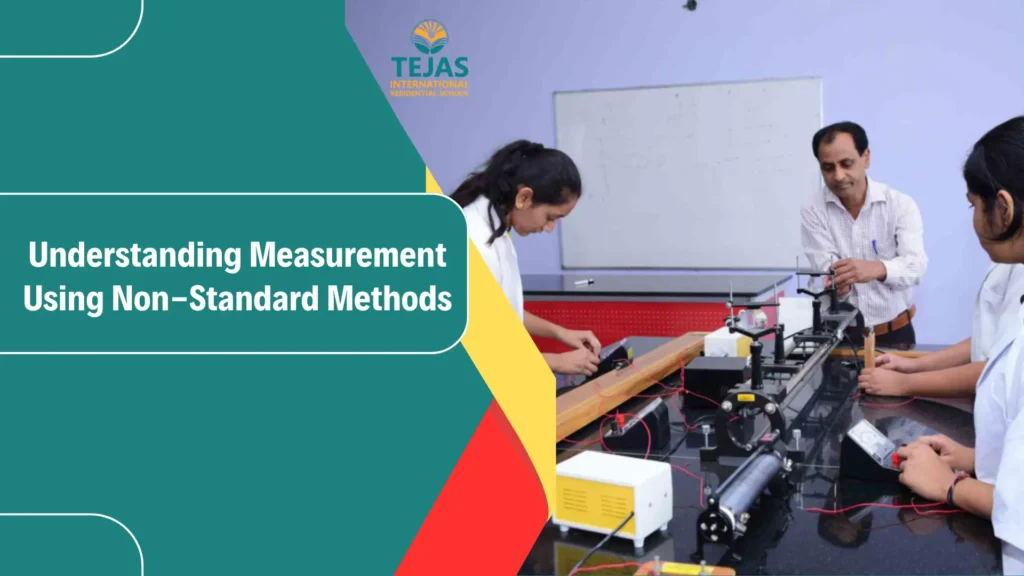
Interactive classroom activities play a vital role in teaching non-standard measurement. Children may measure desks using books, compare water levels using cups, or estimate height using hand spans. These playful exercises improve problem-solving skills and make math less intimidating. At the Best Boarding School in North Karnataka, teachers integrate real-life experiences into lessons, helping students connect learning with their surroundings.
From Non-Standard to Standard Measurement
Once students are comfortable with non-standard methods, transitioning to standard units becomes easier. They already understand the purpose of measurement and can relate new tools like rulers and weighing scales to what they’ve learned earlier. This step-by-step approach, followed by the Top CBSE School in Bagalkot, ensures strong academic foundations and long-term understanding.
Conclusion
Measurement using non-standard methods is more than just a math lesson, it’s a gateway to critical thinking and experiential learning. By introducing concepts in a simple, engaging manner, schools help children enjoy learning and build confidence early on. Institutions recognized as the Best Boarding School in North Karnataka and Top CBSE School in Bagalkot continue to nurture young minds through innovative and child-friendly teaching approaches.
FAQs on Measurement Using Non-Standard Methods
1. What are non-standard methods of measurement?
Non-standard methods use everyday objects like hands, steps, books, or cups to measure length, weight, or capacity instead of standard tools.
2. Why are non-standard measurements taught in early classes?
They help children understand the basic concept of measurement through practical and relatable experiences before introducing formal units.
3. How do non-standard methods benefit students?
These methods improve observation skills, logical thinking, and concept clarity, making math learning more engaging and less stressful.
4. Are non-standard measurements part of the CBSE curriculum?
Yes, CBSE includes non-standard measurement concepts in early grades, especially in experiential learning approaches followed by the Top CBSE School in Bagalkot.
5. How do boarding schools support hands-on math learning?
At the Best Boarding School in North Karnataka, students learn through activities, group tasks, and real-world examples that strengthen understanding and practical application.